Golf Website Coupon Codes - FREE Coupons
Posted April 21, 2008 by GolfSpy X
Believe it or not, you almost never have to pay retail for any website you shop at. (That includes golf stores) Most of the major and even many of the smaller websites have coupon codes that they give to their VIP customers. But just because your not one of their VIP customers does not mean that you can’t enjoy those same benefits. The internet is a marvelous thing!
How It Works
Website owner sends an email to their customer base, saying that all month “There will be a 25% discount on all drivers.” One of those customers sends this coupon to a site that specializes in doing nothing more then displaying coupon codes. You…who are not on their customer list goes to the coupon code site and gets the coupon anyway. Then the next time you shop at site you just enter the “coupon code” and save big money! It’s that easy.

The way I generally do this is I make a folder in my favorites section and bookmark 4 or 5 of the better coupon code sites out there. Then before I purchase anything online I always check these sites to see if there are any coupons for that particular site. About 75% of the time there is a coupon that you can use. Which on average will save you between 10-15%, not bad when you consider it only took a couple minutes of your time.
Good Golf Coupon Code Sites

1. RetailMeNot.com - Search more then 70,000 coupon codes. Simply type in golf into the search bar and you will be taken to a list of great golf coupons.
![]()
2. Coupon Shack - Has a great list of over 60 golf stores and hundreds of golf related coupons. Some of the stores include TGW.com, GolfBalls.com, GolfSmith.com, Callawaypreowned.com and much more.

3. CouponWinner.com - Very easy to use and I noticed some similar coupons to some of the other sites but that is not a bad thing. This one like its name is a winner!

4. MyCoupons.com - Spoke with the owner and they are doing some work on the site but it is still one of the coolest ones out there.
![]()
5. CurrentCodes.com - Has a little bit of an older look to the site but has some great deals. Simply select GOLF as your category and you will be on your way to saving some greenbacks.
Did you enjoy this post? If so, make sure you subscribe to MyGolfSpy!
Putters - The ART of SOUND
Posted April 17, 2008 by GolfSpy X
Inside the Scotty Cameron Studio (by Scotty Cameron)
Every now and again my wife Kathy and I take our daughter ip to Newport Beach to rent a boat and cruise around the harbor. There is nothing better than enjoying the sun and seas, hearing the sounds of the water splashing the hull, and the birds crooning as they fly by. Newport Beach is a special place to me and it is only fitting to have a cpecial putter with the same name. What separates the “Beach” from other designs is the sound slot, which gives the putter a different feel by creating a unique sound.
Sound Slots and How They Effect Sound
The first sound slots were made by a guy named Art Culver who was a neighbor of Ray Cook. The two used to tinker in the garage and when Art introduced the sound slot to Ray he thought it was great and implemented it into his own design and you can find Ray Cook putters today with the same slot. Another great craftsman and engineer, Karsten Solheim, used the sound
slot starting in 1958 on the A-1 design. In fact, there are early putters with tire rubber wedged between the slots to change the pitch and eliminate vibration.
In the Studio, we have experimented extensively with the “Art of Sound” to really understand what it is about sound that changes the characteristicts of the putter. Let me first say that sound is personal opinion. What one person interprets to be a soft or controlled sound another player may find to be “tinny” or “hot”. That said, one of the first experiments we did was to put rifle style headphones, which could eliminate all sound, on a player and ask him to tell us which putter had the best feel. After testing several putters, some with sound slots and some without, the player could not identify one putter over the other. So it is sound that translates into feel and not the other way around. Sound has much more to do with feel than feel itself.
In Search of the Perfect Pitch
There are several factors that influence the sound or pitch of a putter. The closer the cut is made to the face or positioned near the face the more sound. The wall thickness of the design creates a tuning fork in essence. Another factor is the length of the cut or slot. The longer the slot themore sound is able to resonate. Face thickness is also a major factor in creating sound. If the face is too thick vibration and sound is eliminated depending on slot position. If the face is too thin the sound can be very high pitched and there is also concern of the face caving in. Look at address is also a factor. Some players like to see a clean profile but like the sound of a slot so it is cut into the face. Other guys like a more traditional look with a slot cut into the back flange.
We took all of those factors that create sound and experimented with many different designs. Slits went through the face, slits that were short, long, wider, thinner, front, back, and every combination that we could come up with. What we are continually trying to achieve is a controlled pitch that sounds solid and firm. We have also experimented with the sound slot on different putter designs other than the Newport. The Newport 2 for example has a thin topline and there is little room to position the slot.
We get players all the time testing sound in the Studio. When we first began making putters for Davis Love III, we had several designs for him to choose from. The putter that sounded and felt the best to him was a Newport with a sound slot that was cut into the middle of the face . He said the sound was soft and controlled. When we made the Newport Beach in the Studio stainless line, we positioned that slot in the same spot.
Sound is feel and plays an important role in the performance of the putter, especially to the user because sound is also tied into confidence and confidence is critical.
Did you enjoy this post? If so, make sure you subscribe to MyGolfSpy!
How I Know Names of Golf Clubs Before You (Secret Revealed)
Posted April 14, 2008 by GolfSpy X
Want to know the name of the next Callaway Golf club before it gets released?
Patents and Trademarks are extremely time consuming and very expensive, but they are also one of the best resources for getting a glimpse into the future of the golf industry. They give you a sneak peek into the future and let you see what might come out before it even hits the market. Kind of like taking a ride in the ol’ AMC Delorean from the classic “Back To The Future”.
Trick of the Trade
When you are hired to design a golf club one of your first tasks is to search through thousands of patents and trademarks to make 100% sure you are not infringing on anyone else’s ideas or intellectual property. Failing to do so can cost you millions down the road. That is usually where a Patent Attorney comes in. Their brains are built for one thing and one thing only, that’s being able to read “Patent Lingo”. And believe me this is not a lingo that you want to learn, it will have your head spinning in no time flat. But…good thing is you don’t need to anymore. Computers have replaced paper for the most part and now anyone can search through them online at the United States Patent and Trademark Office website.
A Peek In To Future of the Golf Industry
Here are some of the trademarks filed by the biggest golf companies in the US. Included are some names you might already recognize but there are some others that will surely hear about in the future.
Callaway Golf:
1 X-20 TOUR
2 HOGGED-OUT HOSEL
3 MARXMAN
4 BLACK SERIES
5 CLUB R
6 X-FORGED
7 CALLAWAY GOLF CONSUMER EXCHANGE
8 FUSION
9 FORGED X
10 X-20
11 MACK DADDY
12 FT-I
13 STRONOMIC
14 X SERIES
15 PROJECT 6K
16 PROJECT SHADOW
17 PROJECT 5K
18 FT-9
19 FT-7
20 BLACK SWIRL
21 HXH
22 BIG BERTHA ECLIPSE
23 TRI-LINE
24 WORLD’S STRAIGHTEST DRIVER
25 CONCEPT 5K
26 CONSUMER EXCHANGE
27 Orange Sole of Club
28 HYPER X
29 Offset Parenthesis
30 TOP-FLITE D2
31 EXECUTIVE
32 A GAME FOR LIFE
33 TETRA
34 BLACK & WHITE.
35 BLACK & WHITE
36 TOUR EDITION
37 NOTCH BACK
38 ITEC
Karsten:
1 PING RAPTURE
2 G30
3 G20
4 CRAZ-E
5 I30
6 I10
7 CRAZ-E ONE
8 S58
9 G10
10 VARDON
Did you enjoy this post? If so, make sure you subscribe to MyGolfSpy!
50DollarGolf.com Launches BETA Version
Posted April 9, 2008 by GolfSpy X
Amazing New Website Will Save Every Golfer Big Bucks!
The owners at 50DollarGolf.com and EBAY are working together to bring golfers one of the “Most Powerful and Unique Tools” golfers have ever seen. EBAY provides shoppers with over 60,000 golf clubs to choose from! They have some phenomenal deals but those deals have become harder and harder to find due to their success. They have become so popular and such a trusted shopping venue that many of the items now sell for close to the original retail price. And searching through page after page of results can take hours of your day.
“Anyone that has shopped at EBAY knows the frustration of spending hours and hours of time looking for the best deal. And even when you find that great deal it might be too late.”
That is where 50DollarGolf comes in. The owners of 50DollarGolf developed a service that refines the results to search for only the best deals under $50 with the least amount of time left in the auction. This way you never have to worry about spending too much money or too much of your time. It finds unbelievable golf deals that slip through the cracks of the EBAY system, and nothing you find will ever be over $50.
“It is like searching for a needle in a haystack to find a deal on EBAY nowadays. And that is what we do at 50DollarGolf…we search through that and many other haystacks for you to find the very best golf deals. You don’t have to worry anymore about spending hours of your day staring at your screen to see if anyone outbids you in the last seconds of the auction or pay more then you are willing to spend. We only show auctions that are under $50 and that are ending soon.” owner of 5oDollarGolf
How It Works
Really it is very simple. You simply go to www.50dollargolf.com and choose by either a Category (drivers, putters, irons, etc) or a Keyword and the site will do the rest. It will go out and find the most relevant results all which are under $50 and ending soon. It’s that simple!
“It is crazy, there are brand new Nike Drivers and Callaway Iron Sets selling for less then $35 on the site. I even won a Scotty Cameron Newport putter for $12 bucks! There really is no reason to ever pay retail again. This site finds some ridiculous deals…you got to see this!”
says Byron from Florida
So click here and see what deals you can find today.

Did you enjoy this post? If so, make sure you subscribe to MyGolfSpy!
The All-New… “Golf Tax”
Posted April 4, 2008 by GolfSpy X
If You Purchased Golf Equipment Recently Then Most Likely You Already Paid the Golf Tax
Golfers spent and extra $100 million dollars last year because of Tiger Woods. Phil Mickelson cost you $47 Million, VJ another $20 million, and Michele Wie who didn’t win a single tournament, made us spend an extra $19.5 million dollars. And as much as I love Arnold Palmer, I don’t love him nearly enough to have him cost me and others more then $17 million in golf equipment costs. These 5 golfers alone added over $204 Million dollars to what I call the “Golf Tax”. (Amounts represented by Forbes.com)
Independent surveys show that up to 70% of the retail price of name brand golf clubs go to support more then just the cost of producing the club itself. And the increased level of competition and pressure to produce the next Nike Sumo or TaylorMade R7 keeps these numbers on the rise. Below you will see what it actually costs to produce the equipment you purchase:
(Warning: These numbers might shock you!)
1. Titanium Driver = $27-$65 (Depends on type of titanium and processes {ex: Welds, Forging, Paint, etc}
2. Iron Sets = $40-$95 (Depends on type of materials and processes ex: Cast or Forged)
3. Hybrids = $6-$9
4. Wedges = $4.50-$8 (The popular CNC milled face wedges are only around $10 to produce!)
5. Putters = $7-$65 (Varies widely because Cast vs. Milled cost differences.
6. Graphite Shafts = $6-$13 (The Popular Nano Technology only adds about $7)
7. Golf Bags = $18-$35 ($55 for Staff Bag)
8. Headcovers = $3-$5 (Depending on material and thread counts)
9. Golf Towels = $2.50-$2.80
10. Golf Gloves = $2.50-$3.00
11. Golf Balls = $4-$8 (Titleist Pro V1about $8!)
* Additional processess and features can add minimal amounts to the cost of a club, but the amounts are negligible compared to what people are paying at the registers.
Why Do They Charge $400 for a Driver?
So where do they come up with these ridicoulous price tags, like $400 drivers? Well they have to cover their cost or otherwise none of them would be in business. But why are their costs so big? I stated earlier that increased levels of competition in the industry have lead to big spending in many areas. Two of the areas most effected are (Overhead and Endorsement Spending). You might not have noticed, but companies are launching new models much more frequently then in the past. In the past, a newly released model would last for 2 seasons sometimes even more. It wasn’t until the past decade that almost all companies were releasing new models annually. And in the last couple years companies like TaylorMade and Cobra have decided to release up to 5 or 6 models a year! All in the effort to catch whatever market share they can. The old adage “Throw it up against the wall and see what sticks” seems to be all the rave in the golf industry.
The other area effecting price tags, is Tour
and Celebrity Product Endorsements, which I touched on in the beginning of this post. This is costing you and other golfers astronomical amounts to the bottom line of the equipment you are paying for. Golf companies are sponsoring anyone and everyone that has a pretty smile and is seen on TV on a regular basis. You don’t even have to be a golfer anymore to get an endorsement deal. You might remember when Callaway endorsed Alice Cooper (famous Rock Star). Bill Gates has even received some scratch from a golf company in past years. Other areas that effect the final cost of your new golf club are listed below:
1. Research & Development
2. Company Overhead
3. Middlemen (Proshops)
4. Advertising
5. Player Endorsements
6. Legal Fees
The Manufacturers Argument
They might say that these advertising and brand development costs are legitimate — they would say that they provide advertising revenue to the major golf magazines, they provide many millions of dollars of licensing revenue to PGA Tour professionals, they provide even more millions of dollars to the major television networks.
I Agree But I Also Disagree
I think many of these points are valid…but I think similar to the Real Estate crash that is occuring right now we might be in store for a similar crash and in the golf industry sooner then some may expect. The race for golf club sale suprememcy will be at a very steep cost for some of the biggest brands in the industry.
The money spent in advertising is only spent because they want to build a feeling of status and peer pressure to buy a name brand. It is not because their product is better then the other. And also you have to remember that if they are developing more products they have to come up with more ways to convince you to buy them…which costs big money. And in the end every advertising dollar spent by the name brand club is targeted to make you feel better (or justified) in paying more money for the brand. Some people raise their self-esteem by buying a name brand club for more money (it is a fact unfortunately). However I think that during this time in the economy golfers might begin to consider raising their self-esteem by getting the best performance for the best value and knowing their name brand buddies got a worse deal.
Did you enjoy this post? If so, make sure you subscribe to MyGolfSpy!
No More 3-Putts For You!
Posted March 29, 2008 by GolfSpy X
Pick The Right Putter Hosel and You Might Never 3-Putt Again…
When selecting a new putter, there’s a lot to investigate, but most golfers forget about the hosel. This seemingly innocent design feature often has the most significant effect on how the club actually swings. Furthermore, knowing the difference between one hosel design and another can provide some insight into your stroke and what type of putter you are. Let’s examine some of the more popular hosel configurations, and try to help you become a better putter today.
“I putted with a center shafted putter for years and always assumed that I was going to have to settle with always being a bad putter. It wasn’t until you fit me for a plumber’s neck hosel a couple years ago, before I realized I could actually putt and I have never looked back. I just cannot believe that I had the wrong putter for all those years. I just never thought a hosel made that much of a difference, and that different putting strokes are better suited for different style hosels.”
1. Plumber-Neck
The plumber-neck is characterized by a horizontal bend just below where the end of the shaft and the hosel meet. This design, which generally provides a medium amount of offset, does a great job of keeping the hands ahead of the clubhead through impact. This tends to make the putter more forgiving and easier to use, which is the reason it’s so popular. Putters with plumber-neck hosels tend to be somewhat toe-down in their weighting scheme, which encourages a slightly inside-square-inside stroke
.
2. Flare-Tip
The flare-tip is typically a “shaft-over” hosel, meaning the shaft covers the top of the hosel where the two connect. Putters with flare-tip hosels generally have less offset and are more blade-like in their design. These putters tend to be quite a bit toe-down in their weighting scheme and usually work best for golfers who like to rotate the blade open and shut through the stroke.
3. No Hosel
Face-balanced putters often have no hosel, but instead an S-bend shaft that goes directly into the putterhead. These putters are designed specifically for golfers who want to take the club straight back and straight through in a piston-like motion. If you typically like to rotate the clubhead during your stroke, these types of putters probably won’t work as well for you, although there are no absolutes in this regard.
4. Long Hosel
These designs are usually elongated plumber-necks and are used to create face-balancing. Although they look very similar to the standard plumber-neck design, the extra length definitely creates a different feel, which you should take into consideration before selecting a putter with this type of hosel structure. Be aware that the elongated plumber-neck design doesn’t always result in face-balancing; many, in fact, are toe-balanced.
5. Slant-Neck
These hosels often are plumber-necks that bend back from the shaft line. Usually, this type of putter is used to create a more substantial amount of offset, which promotes more of an upward strike into the golf ball. Another beneficial aspect of the slant-neck design is the position it places the hands in just prior to, and through, impact—just slightly in front of the golf ball.
6. Center-Shaft
The majority of putter models feature shafts that enter the putterhead near the heel. Some, however, feature a more centered shaft insert position. This design typically is associated with a flatter lie angle, promoting a low-hands position. Also, the center-shaft position places the swing axis closer to the golf ball, eliciting extra control and a feel many golfers prefer.
Did you enjoy this post? If so, make sure you subscribe to MyGolfSpy!
Want To Be A Putter Designer? Read This First.
Posted March 25, 2008 by GolfSpy XConvinced You Have The Next Great Putter? Design At Your Own Risk!
Janis Zichmanis would lie in bed waiting out the lonely moments of frustration, fear and fantasy that leave many of us with the cold sweats. He had to confront the demons that pry their way into the mind when there are too many bills to pay, nothing left to mortgage and nowhere else to turn. By late summer it was day to day; he was on the verge of being out on the street.
At 62, retired and living in Toronto, he should have been in his golden years after a successful career as an advertising copywriter. But all that Zichmanis had left (more than $100,000, he says) was invested in a mission, of sorts, an all-encompassing pursuit that almost no one is crazy or devoted enough to try.
“I can’t tell you how close I was, I must confess,” says Zichmanis, who even got to the point where he had to borrow “several tens of thousands of dollars” from a couple of school friends, whom he now calls minority partners. “I definitely would have had to move. I would have been living with someone else.”
What took Zichmanis down this road toward insolvency wasn’t gambling, bad investments or drugs. It was golf. Specifically, inventing a putter. And he is not alone.
Lurking in the fringe of the golf industry are more than a handful of these inveterate tinkerers, possessed by the pursuit of discovering the perfect putting implement. Their passion seems at first glance bizarre and yet admirable, almost inspiring. These are inventors, discoverers, dreamers. What drives them isn’t merely capturing a small piece of the estimated $195 million putter industry. More than that, they have the answer, and they want to share it with everyone.
Why are they so compelled? Ask Scotty Cameron, the celebrity-genius of wannabe putter designers and an indirect descendant of their patron saint, Karsten Solheim, the one-time General Electric engineer and the man who invented Ping.
“It’s about building a better mousetrap,” Cameron says. “We’re different people. Like Walt Disney, who went to 80 different banks before anyone gave him the money. He had a passion and a vision to believe. There’s no difference when you make putters. It’s believing in your talents. If you get shot down enough, you may have to do something else. But if you have a passion and a vision, you can succeed.
”
These inventors are easily given hope, especially in a time when pros routinely choose odd grips and even odder-shaped putters to combat their putting woes. Zichmanis believed his Pure Pendulum System would surely draw interest from some investor, especially in the presence of his almost evangelical enthusiasm. Nevertheless, investors, golf manufacturers and even the PGA Tour (no credential) showed Zichmanis the door all too often. Interesting, they’d say, but not interested. By mid-2003, Zichmanis was close to losing his home.
“When you’re against it, it’s time to see what you’ve got,” he says. “It’s always the question you get in your mind. And depending on how you react then, you look at life differently.”
His fervor is a mixture of the unsettling (he will happily provide you with a copy of the 7,000-word prospectus for his putter) and the infectious (you can’t help but try it, especially if you haven’t made anything longer than a two-footer lately). More than just a putter, Zichmanis’ Pure Pendulum is a reinvention of putting itself. Its grip is nearly 1 1/2-inches wide, enough for most to use a side-by-side position with the thumbs. To hold the putter properly, the fore and middle fingers drape down the sides of the shaft, while the ring and pinkie fingers interlock on the underside of the shaft, promoting a straight-back and straight-through stroke, similar to a pendulum.
Looked at another way, Zichmanis’ grip takes the shape of hands folded in prayer.
A Dream (and one meal a day)
Walt Boettger has already refinanced his home in Folsom, Pa., twice. He jokes there isn’t a belt in his closet he hasn’t punched extra holes in. And after 12 years of running his tiny company, Straight 8 Golf, he had spent about $1 million to keep it afloat. He says he reached a turning point while developing his SteadiStroke putter last year. How much of one? The project’s success left him claiming a 2002 income of $500.
From thinking up the shape to refining the type of brass in the head to getting the right softness in the polymer inserts, Boettger says the SteadiStroke was an 80-hour, seven-day-a-week job without a steady paycheck. “I think about it when I get up in the morning, and I work on it all day, and then I think of it when I get to bed,” Boettger says. “I have the most incredible wife who ever lived. What I have put her through, this woman should be a saint.”
Did you enjoy this post? If so, make sure you subscribe to MyGolfSpy!
The New Titleist 909 Driver ?
Posted March 18, 2008 by GolfSpy X
New Patent Filed by Acushnet Golf will Issue Soon…Could it be the new Titleist 909?
There have been numerous reports about a new Titleist driver coming out in the Fall of 2008. Surprise to many….but from the info we got today this might not be a surprise for long (drawings below). This year saw the release of two new Titleist drivers (907 D1 and 907 D2), both have had disappointing results to say the least. And in the past couple months I have been bombarded with Titleist die-hards making claims like “These new drivers are the worst Titleist has ever produced!” and “I switched to a different brand, this is a big deal considering I have played Titleist clubs exclusively for the past 20 years.” This is not good news for Titleist.
Out with the New and in with the Newer
Titleist as a company usually holds on to a new driver design for much longer then half a season but, with rumors like this and the fact that (30 out of 64 of their touring pros) are continuing to play older models might be forcing them to go back to the drawing boards sooner then expected. And it is never a good sign or marketing tool when the people you pay to play your clubs will not even put it in their bag. And if they don’t make a switch they might just lose their life-long devoted followers for good. Word around the golf industry has the next model being called the Titleist 909. This would be the logical progression, since past models were named 905 and the 907. I have been hearing different stories in regards to the name, but the name is the least of their worries right now.
One other mystery is what it will look like. This is what everyone really wants to know and from the buzz we are hearing it will be a remake of the 905R but with a much more radical design. Sounds like they are looking for the feel, sound, distance and control of the 905R but with some ground breaking technology. And when Titleist sets their minds to making ground breaking technology they generally hit their mark.
Could it be the Titleist 909?
No word on whether or not this new design owned by Titlesit will be the next Titleist 909 or not but from the looks of the drawings I assume it will be a new Cobra model. I just cannot imagine Titleist making this their peace offering to their devoted fans. But let us know what you think.


Did you enjoy this post? If so, make sure you subscribe to MyGolfSpy!
The Scotty Cameron Story
Posted March 11, 2008 by GolfSpy X
Few would have predicted such success for the boy growing up in the Southern California town of Fountain Valley. But his father, Don did.
“My father was a golf nut,” Cameron explains. “He liked to fiddle with woods and putters. He was a real craftsman, and I started hanging out with him in our garage when I was five years old. Eventually I started helping out, and my father always used to say, ‘Do it right, or don’t do it at all.’ And if I used the wrong tools to do the wrong job just to get by, he would make me leave until I wanted to do it right. The thing is, I loved working with him, and I loved working with putters,” Cameron adds. “It was what we did together, both tinkering and playing. And it lasted for about eight years, until my father died at the age of forty-six. One of the last things he said to me was ‘Stick with the game of golf. I think you have a future.”
Scotty Cameron also saw his future in golf, and he kept up with his club making. “I liked that putters inspired the most craftsmanship of any club and were the ones golfers used the most,” he says.
During his teenage years, Cameron created many different types of putters on his father’s milling machine, passing them on to friends to try out and report back on. He worked in a golf shop for a while after college, and in 1986 he joined the Ray Cook Co., which made and sold putters. For the next several years he worked for several golf companies, designing putters and learning other aspects of the business. In 1991, he started his own company, buying used equipment with money he had saved. When a friend offered to represent him full-time on the PGA Tour, he began getting his putters into the hands of pros.
“My goal from the start was to make the finest putters anywhere. Ones that looked and played better then anything,” Cameron Recalls. “And my big break came a couple years after opening, when Bernhard Langer won the Masters with one of my putters. A major makes names, and it definitely put me on the map. I suddenly went from being this wannabe to being a putter maker, and it was a lot easier getting my products into players’ hands.”
- But it wasn’t only players who became interested in Scotty’s work. At the time Titleist was looking for a way to expand its business and especially in the putter market. And the CEO of Titleist Uihlein was looking for someone creative and who understood a putter inside and out. And at the time the man for the job was Scotty Cameron. After a couple meetings they agreed to a deal that allowed Scotty to remain somewhat independent but also make a name for the Titleist brand. By all accounts the deal has worked well for both of them.
A Snapshot of Scotty’s Career:
Companies
1990 Garage
1991 Ray Cook
1991 Maxfli
1992 Cleveland Classics
1992 Founder’s Golf
1992 Mizuno
1993 Founded: Cameron Golf International
1994 Titleist (Scotty Cameron)
Products
1995-1996
First line of Scotty Cameron by Titleist putters released (now referred to as Classics). All models took their names from locations in California: Newport, Catalina, Coronado, Del Mar, La Costa, Laguna,and Napa. Santa Fe and Sonoma models are added in 1996.
1997
Teryllium series is introduced. These putters feature an alloy face insert. Three models are initially released: Newport, Newport 2 and Santa Fe.
1998
Classics - Product line is revised and released with a new Oil Can finish.
Teryllium - Del Mar 2 and “Long Neck” versions of the Newport and Newport 2 are released.
1999
Teryllium II - Second generation is launched. Polymer cushion is added behind face insert to soften feel.
Pro Platinum series is introduced. These putters feature a non-glare finish and are available in four models: Newport mid-slant, Del Mar 3, Laguna 2, and Sonoma 2 mid-slant.
2000
Oil Can Classics - Series is discontinued.
Mil-Spec Newport putter is released. This putter features different length, weight, and lie angle options to allow for custom fitting.
2001
Studio Design series is introduced. These putters feature a classic blade-style design, and are the first Cameron/Titleist putters missing the now-familiar “California” names. The model names are 1, 1.5, 2 and 3.
Bulls Eye - Scotty releases his interpretation of this classic design. Two models are offered (flange and non-flange) in a “pro platinum” finish.
2002
Teryllium II - Series is discontinued.
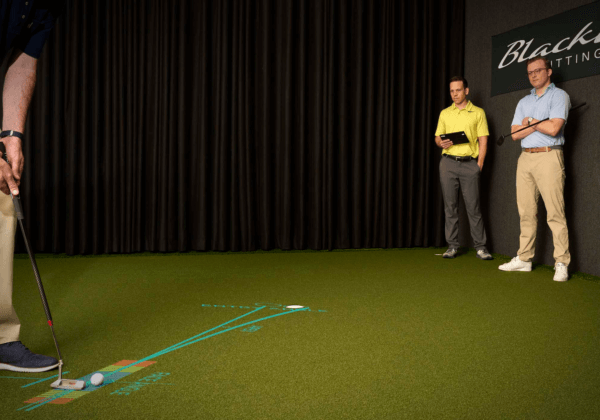
Studio Stainless series is introduced. These putters are milled from 303 stainless steel and available in four models: Newport, Newport 2, Newport 2.5 and Newport Beach.
Armani edition. These putters are milled from 303 stainless aluminium and available in four models: Newport, Newport 2, Newport 3 and Newport Brazil.
2003
Pro Platinum - Series is discontinued.
Futura model is introduced. This putter is a radically different des
ign than anything Scotty had produced in the past. The Futura is offered in standard and mid (44” long) models.
2004
Red X series is introduced. These mallet-style putters feature a high-grade stainless steel face insert which is intended to enhance feel.
2005
Studio Stainless - Series is discontinued.
Studio Style series is introduced. These putters incorporate the insert technology of the Red X into the appearance of the Studio Stainless. This series features four models: Newport, Newport 1.5, Newport 2, Newport 2.5.
Futura - Upgrade to the original model’s appearance, and the addition of two Futura-inspired mallet putters. This line is renamed Futura Phantom.
2006
Circa ’62 series is introduced. These putters feature a classic desig
n similar to that of the Studio Design series and are named in the same numeric fashion (1,2,3 & 5). The ’62 references the year Scotty was born.
Red X - Mid (43”) and Long (48”) models are added.
Detour model is introduced. Similar to the Futura concept, the Detour features a very unconventional design.
Napa Valley limited edition is released. 2006 pieces (1,800 RH & 206 LH).
2007
Circa ’62 - Model line is update with a new “Charcoal Mist” fini
sh. The number 5 model was replaced with the 6.
Red X - Two new models are introduced. These models do not feature the face insert of the originals.
Detour - The radical design of the original Detour is adapted for use in two “conventional” putter models: Newport and Newport 2.5.
Teryllium Ten (T10) limited edition is released. 2007 pieces in Newport 2, 2007 pieces in Newport 2.5.
Catalina Classic limited edition is released. 2007 pieces.
2008
Studio Select - Series is introduced -Update to the studio style, it has a higher toe to prevent pulling putts to the left and factory adjustable weights on the bottom, near the heel and the toe; a solid stainless face and the tour “cherry bombs” on the back and on the head cover; available in the Newport, Newport 1.5, Newport 2 and Newport 2.5 models
PGA Victories
1993 The Masters - Bernard Langer-thought to be made by Scotty but made by Bettinardi for Mizuno
1996 US Open - Steve Jones
1997 The Masters - Tiger Woods
1998 PGA Championship - Vijay Singh
1999 PGA Championship - Tiger Woods
2000 US Open - Tiger Woods
2000 British Open - Tiger Woods
2000 PGA Championship - Tiger Woods
2001 The Masters - Tiger Woods
2001 British Open - David Duval
2001 PGA Championship - David Toms
2002 The Masters - Tiger Woods
2002 US Open - Tiger Woods
2003 The Masters - Mike Weir
2003 British Open - Ben Curtis
2004 The Masters - Phil Mickelson
2005 The Masters - Tiger Woods
2005 British Open - Tiger Woods
2006 US Open - Geoff Ogilvy
2006 British Open - Tiger Woods
2006 PGA Championship - Tiger Woods
2007 PGA Championship - Tiger Woods
2008 The Masters - Trevor Immelman
Did you enjoy this post? If so, make sure you subscribe to MyGolfSpy!
1st Place Bubba Watson……38th Place Tiger Woods
Posted March 5, 2008 by GolfSpy X
Say it Ain’t so Tiger…
2. JB Holmes (307.7 yards)
3. Dustin Johnson (303.1 yards)
4. Brett Wetterich (302.6 yards)
5. Anthony Kim (301.6 yards)
6. Robert Garrigus (301.3 yards)
7. Fred Couples (298.8 yards)
8. Tag Ridings (298.8 yards)
9. Jason Gore (298.0 yards)
10. Lee Westwood (295.9 yards)
What this tells us: firstly, we’ve got to stop making the assumption that Tiger’s ripped physique means he’s yards better than the rest with the big stick (he’s actually ranked tied 38th alongside Robert Allenby and Lucas Glover with an almost girly 289 yards). Secondly, a gigantic salute to Freddie Couples, who keeps booming them off the tee box even with a bad back. We get the feeling you won’t be asking the question ‘Dustin who?’ for too long, after decent finishes in his first handful of tour events. And finally, check out Lee Westwood’s 989 place leap up the charts.
Did you enjoy this post? If so, make sure you subscribe to MyGolfSpy!


Golf Spy X