


“The Harrison Shotmaker is definitely one of the most impressive golf technologies for 2011…it might be the biggest in the last 5 years! I can honestly say, I recommend EVERYONE contact Harrison immediately about getting one for their driver. A product that helps your game this much this easy only comes around so often.”
Introducing: “MyGolfSpy Labs”
Today we launch something brand new and exciting at MyGolfSpy. It’s called the “MyGolfSpy Labs”!
And trust me you are going to like some of the ideas we have in store for you inside the Lab. This has been in the works for long time so we are pumped to kick-off the inaugural article. Inside the MyGolfSpy Labs there are no scores, no grades, in the mygolfspy lab you either pass or you fail, simple as that. The MyGolfSpy Labs is about one thing: FINDING THE TRUTH!
Golf companies have always made outrageous claims about how much their product can improve your golf game. We’re going to put these products and their claims to the test, once and for all. These tests are pass or fail, they either hold up to their claims and get the “MyGolfSpy Stamp Of Approval” (or) they fail and get the “Big Thumbs Down ”
// Edition #1 – Harrison Shotmaker
We have some eye-popping concepts and ideas stewing in the labs that are going to blow your mind. But we had to choose a first product to put through the lab and this one surely does not disappoint. It’s called the Harrison Shotmaker, and the results are nothing less than SHOCKING!
So, What Is The Shotmaker?
The Shotmaker is the first USGA rules conforming accuracy boosting shaft insert of its kind. It’s a removable insert (aprrox. 12″ long & weighing only 4 grams) that is made with ultra-thin-ply graphite (UTP). The most vulnerable section of a golf shaft is its tip section. The Shotmaker insert significantly stabilizes the tip section of the shaft, resulting in greater accuracy. The insert prevents excessive vibration and deformation and Harrison claims it improves accuracy up to 40% (We will just have to see about that).
This isn’t exactly news to the shaft makers out there. Those guys have been trying various things to minimize the impact of distortion for a while. The most common approach has been to simply stiffen or increase the interior thickness near the tip of the shaft, but without exception those type of solutions have led to either a loss of, or just plain crappy feel, and to a large extent haven’t worked very well anyway. Shaft manufacturers like Aldila and Matrix have tried things like uneven and angular shaft bores to try and improve stability as well, but this is the first time anyone has tried to solve the problem with an insert.
There may be some misconceptions out there that the Shotmaker is a substitute for Spine & FLO, or SST Puring. While those techniques might improve performance by guaranteeing that the shaft will flex most naturally along its linear spine, they don’t directly address the s-shaped (wave-like) distortion that occurs when your driver hits the ball. Anyways enough with all the technical jargon, lets get to the test.
How We Tested
To test the Shotmaker we followed the same protocols we use for our ULTIMATE Reviews. Our 3 testers were asked to hit 12 shots each without the Shotmaker installed, and 12 more with the Shotmaker installed. Fitting the Shotmaker can be tricky. Fitting for swing speed is one thing, but trying to determine the optimal fit based on angular velocity isn’t exactly our expertise. Fitting was admittedly a bit of trial and error.
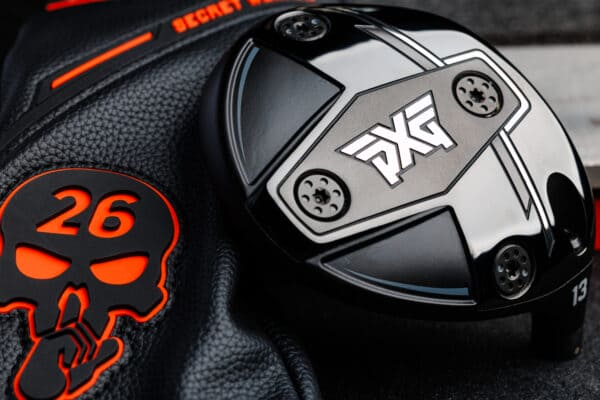
Two of our testers hit a clone of a popular head outfitted with a 65 gram Harrison Mugen Black shaft. Our 3rd tester hit an Adams 9064LS outfitted with a 75 gram UST ATTAS T2 shaft. In both cases the shafts had been spined and FLOd prior to the onset of testing.
THE CLAIMS!
As you can imagine, Harrison has a lot to say about the performance of their Shotmaker. Most companies do when they have a new product. But we don’t care about claims, we only care about results. So, below you will see what Harrison claims the Shotmaker will do for your game. We then put those claims to the test and give you the results.
- Improved Accuracy by up to 40%. (Yeah…bold statement)
- Lowers Spin Rates
- Produces More Solid Shots
- Has an Insignificant Effect on Stiffness
- Has an Insignificant Effect on Trajectory
- Does Not Alter Swingweight (when installed with the optional grip cap)
THE RESULTS!
- Accuracy: So the big question everyone wants to know is “Does this thing actually work, will it make me more accurate?” Well, to say that our results are anything less then jaw-dropping would be an understatement! Based on dispersion from the center line, our 3 testers improved their accuracy by 45%! Yes, you read that right. I can honestly say I recommend EVERYONE contact Harrison immediately about getting one for their driver. A product that helps your game this much that easy only comes around so often.
- Lower Spin Rates: Our tests showed that average backspin rates dropped by 3.4%. The impact the Shotmaker had on sidespin was slightly more impressive. Average sidespin rates dropped by 229 RPMs, which is a 38% drop from the non-Shotmaker totals.
- Produces More Solid Shots / Insignificant Impact on Stiffness: It’s very hard to prove or disprove “more solid shots”. Where feel is concerned, or testers either told us they felt no difference, or that the club felt more stable with the Shotmaker installed.
- Has an Insignificant Effect on Trajectory: Comparing both vertical launch angles and total shot height leads us to once again agree with Harrison’s claims. With the Shotmaker installed, the apex of the trajectory decreased by less than 1 yard, while the average launch angle decreased by only .3 degrees.
- Does not Alter Swingweight: With the grip cap installed, we’re inclined to disagree ever-so-slightly with Harrison’s claims. There are of course mitigating circumstances (grip weight, and the how close to the hosel the Shotmaker is installed), but in both clubs we tested, we found that the Shotmaker added approximately 1/2 of 1 swingweight point. Although negligible, it does constitute a change in Swingweight.
- Distance: Though distance isn’t the major selling point of the Shotmaker, our testers actually increased overall distance by nearly 3 yards, while increasing carry distance by 2. From a percentage standpoint the gains are largely insignificant, but hey…this is golf, and 3 yards is 3 yards.
A 45% Accuracy Improvement!
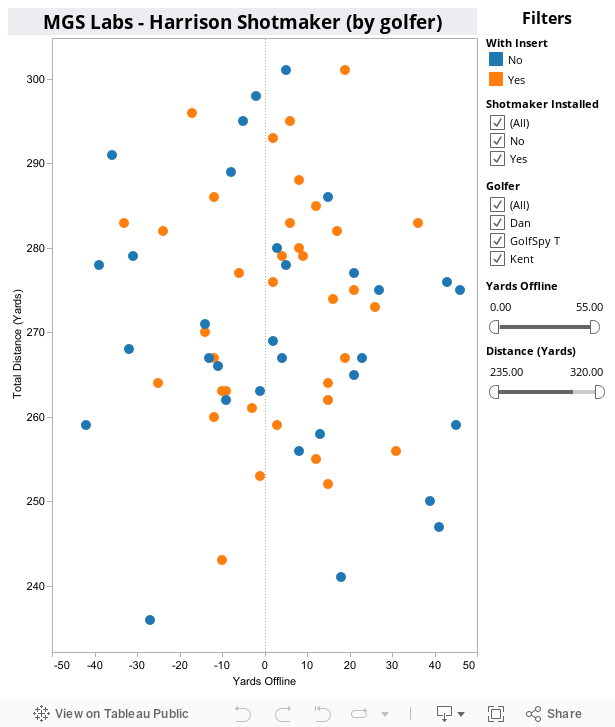
Based on dispersion from the center line, our 3 testers improved their accuracy by 45%! This exceeds Harrison’s claims. It must be pointed out that a single tester posted what we must consider anomalous results as he increased his accuracy by 57% (from 32 yards without the Shotmaker installed to just under 14 with the insert in place).
Obviously not everyone can expect those types of gains, but even if we exclude those results, our remaining testers reduced their misses from 19.3 yards to 12.55, which equates to slightly less than a 35% increase in accuracy, which is still a very significant gain.
For those interested in the shot by shot details, we’ve included the interactive range chart so you can sort our results by golfer, with and without the Shotmaker installed.
Conclusion
The Harrison Shotmaker is definitely one of the most ground-breaking golf technologies for 2011…it might be the biggest in the last 5 years! Based on our test results, we are extremely confident when we say that the Harrison Shotmaker will absolutely improve your accuracy.
With the results we got and a price tag of only $99, the Shotmaker is a bargain in the equipment industry. Many golfers are willing to spend several hundred dollars on a new club for the often false promise of improved results. The Shotmaker offers the promise of a measurable increase in accuracy without the cost of a new club or costly shaft upgrade. The Shotmaker 100% gets the “MyGolfSpy Stamp Of Approval”!
(*Note: In addition to the shafts with uneven or angular bores, current versions of the Shotmaker will only work in shafts with a .335 tip. Harrison is working on a compatibility chart, so it’s recommended you confirm compatibility before making a purchase.)
Editor’s note: shortly after publication a couple of alert readers noticed some errors in our calculations (I flipped the formulas by mistake). The percentage gains have been adjusted since the original publication, but the results remain impressive.
INSTALLATION
For those of you interested in shot by shot detail, we’ve included a sortable chart that shows every shot taken during our Shotmaker tests.






{ 59 comments… read them below or add one }
Let’s be fair and do a comparison using the Balanced Certified stabilizers and overlay the results with the Harrison Shotmaker.
Spoken with and requested info from Balance Certified on multiple occasions and have yet to get a response. Also they are not an apples to apples product comparison.
I have the Balance certified inserts in my clubs and they seem very similar. What is different in the Harrison that wouldn’t make it an apple to apple comparison?
Balance-Certified’s product is more about counter-balancing the club (reducing swing weight), and providing vibration dampening at the butt-end of the shaft. The Shotmaker slides down into the shaft, and provides additionally stability at the tip (the source point for the distortion that occurs on impact). They do two very different things, although it’s worth mentioning the two products could be used in conjunction with one another.
I believe a more direct comparison to Balance-Certified would be Boccieri Golf’s “Heavy Technology”, which contrary to what most people believe, increase weight towards the butt end of the shaft, which they claim provides more control.
GolfSpy T,
Do you know of any affiliation between Harrison and the TourLockPro guy? I’ve heard one owned the other (Harrison owns TLP) but I don’t think that’s true.
If you look at their products, they are some eerie similarities. Unless patents are being infringed upon, there has to be a working relationship between the two.
Harrison was/is nothing in the shaft world these days. I can’t believe they’d come up with something revolutionary. Harsh but my opinion.
From the outside looking in, it looks like some “side effect” benefits of the TLP was shaft stability. Harrison took the idea and ran with it. Instead of a 20 gram weight, they made ones 4 or 5 grams for all the stability but none of the CW balancing benefits. Any comments?
Where is the $99 price? The website shows $149.
We originally listed it in the article as $149 but got this response from the company:
“The retail price for the Shotmaker itself is only $99. If it is installed by a local golf pro, the user does not need to purchase the insert tool, hole cutter, etc. ”
Hope this helps Bill.
Thanks, still looks like a great device.
I thought I could get a better deal on Ebay, but cost more than $99!
http://shop.ebay.com/i.html?_nkw=Harrison+Shotmaker&_rdc=1
Thanks for the great pics. What kind of camera do you use?
Somebody needs to send one of these to Tiger.
In the meantime, I’m going to take the plunge myself as soon as I decide whether to replace my Ping I15 with the G20 or not.
BTW, I read another excellent review of this piece of equipment by a leading-edge boutique golf equipment shop in California, just down the street from the house I moved out of (literally) last week.
Thanks for a great article!
I hope they have .350 version coming. I wonder if this would work ok for a fairway wood? I actually have more directional issues with those than drivers anyway.
The insert will work in most .335 tip shafts; including any installed in fairway woods. In the Mugen Black, the fit was dead solid perfect. In the ATTAS T2, there is a very, very slight rattle when you tap the club on the ground.
This is a great review. Congratulations on coming up with a fair and equitable review format.It is the best I’ve ever seen…especially when compared to the ones I’ve had to use in the past. Simply “PASS” or “FAIL” and exact reasoning as to why accompanied with specs to back up said reasoning is no less than phenomenal. Hats off buddy!—\
P.S.—-I’ll probably be picking up one of these shotmakers and having it installed shortly.
Keep up the great work.
I’m asking myself how this thing works? Does it attach to something or just wobble inside the shaft? And can we get a bit more technical and explain the science behind it? I love the concept and want to buy one for my son who is a big hitter but unexplainably sprays his tee shots. I have felt for some time that just stiffening the shaft is not enough when you have a swing speed over 110 MPH. Some strange things happen at those speeds that defy logic almost like valve float when you over-rev your engine. Please, more “splainin” on this gizmo. I love it!
When installing the Shotmaker, you loosen the red screw (visible in the pictures), and drop it the shaft. The install tool may push it just a tad farther down, but generally it sits pretty close to where it lands. You then tighten the screw (using the telescoping wrench), which expands the black plug at the end of the shotmaker, which in turn exerts enough tension to keep the device firmly in place.
It’s basically a tube within a tube, and though it’s an extreme example, conceptually it works similar to a your bones…insomuch as they keep your limbs/and skin from flapping about.
If you live in NJ or Philly area, I am the local dealer for the shotmaker. I have a number in stock and would be able to fit you for the correct one. I have sold a number of them so far with excellent results in both the driver and fairway woods.
Hi Club Tech,
Question. Can the shotmaker be re-used in another shaft? I’m an a part-time club maker who likes to fool around with different shafts in my driver and would be interested if I could swap it out to another shaft.. Thanks
Wayne – The Shotmaker takes about 15 seconds to install and can be just as easily uninstalled in less than 30. We’ve moved our samples between multiple shafts without issue.
This could be one heck of a comeback for Harrison. Years back their shafts were the gold standard, and are still fantastic today while still blowing the competition away on price. I will be getting one for sure!
While I won’t suggest that I’ve done extensive testing with it, the Mugen Black shaft we used in part for this review was well liked where looks and feel are concerned. The launch and spin numbers were generally pretty good as well (I always spin more than I want to), but I’ve certainly posted much higher spin numbers with some of the other stuff we’ve had in.
Have you thought of repeating this experiment blind? Don’t tell your testers if the insert is there or not and see if you still get similar results.
I’m thinking of the “tin cup” effect on hitting the ball; i.e. turn your hat around, put your keys in your left pockiet, ect. The mind can play powerful tricks on a tee shot. I just might be inclined to relax, feel more confident and therefore swing smoother if I know I have such a device in my club. It would be nice to know if it’s really the stabilization of the shaft or a Jedi mind trick.
. The mind can be a powerful tool.
It was supposed to say “thumbs up to Bob” before the “.”… I have no idea why it got left out.
So these guys can not hit shots consistant but a magic tool is going to help there mind over power a path and club face issue??? The shotmaker is proven with various testers of ability to diffently improve accuracy and does gain some distance, some more than others. It is a proven tool that is helping aid a problem that everybody knows exist with shafts while swinging them.
It’s also been proven that when someone buys the new and shiny “it” driver and/or shaft their performance increases, for a time. The “honeymoon effect” usually kicks in after a while (different lengths of time for different people). That’s what I believe Bob meant by “Jedi Mind Trick”.
Brandon, you shouldn’t get so defensive.
A blind test would simply make the results that much more believable.
I completely agree about the mental effect regarding how we feel if we ‘know’ that we are using a shot improving device. Athletic performance is a subtle thing.
You mentioned the shafts used were spined. Did you do a test with factory installed or unspined shafts and compare results. Interested to know if the percentages change. Great article.
looks amazing, do u think if its worth it for the price?
u guys should do some shaft testings
Same queastion as Pat Polzin, it would be interesting to see results from factory fitted off the shelf shafts before they have been spined & FLO’d. As the majority of people to be interested i imagine would be the average joe that isnt going to go through the spining process.
I play with the Titleist 910 D3 driver which has an adjustable shaft. I have always played with spined shafts or SST pured shafts in the past, and love the improved feel, and tighter dispersion that is gained. Those technologies don’t make sense to me in adjustables. Will this work in adjustable shafts?
Great question, Oneda. Adjustability itself is not a factor in whether or not the Shotmaker is compatible. As long as the shaft has a .335 tip, and doesn’t have some sort of special bore (Aldila VooDoo, Matrix) it will likely work.
As you can imagine it was a perfect fit in the Harrison Mugen Black shafts we tested in. With the UST ATTAS T2 (the golfer who showed the most improvement), there was is some slight rattle when you tap the club head on the ground, but otherwise the fit is solid, and clearly didn’t negatively impact performance.
Maybe not an apple to an apple but both claim to tighten shot dispersion and that is a common link. I have an e-mail from Michael Cranston at Balanced Certified and he says a comparison would be fine. Do you need the contact info?
A bad swing is a bad swing. Placing something in the tip of the shaft is not going to change where the club head is at impact.
I agree with a blind test being very effective.
thumbs up!
I think the issue here is to make a mediocre swing tolerable. If this can deliver one more fairway per 14 on a round and keep another in the first cut versus the thick stuff, we are talking a meaningful improvement. I gotta try one.
I would still like to see a comparison and over lay with the shotmaker results above. Try with both items installed, no wait that would be a Nunchuk.
what do you think of using Balance Certified along with ShotMaker?
Here is the Patent # for Tour Lock US 7,481,716 B1.
Does anyone have the Patent # for Grip Lock?
Thank you for your kind words. It was Eric sticking a shaft below the grip to stiffen the butt end that got me thinking about other possiblities, and it eventually led to the creation of the Shotmaker.
My apology for the online ordering problem. We stop taking online order over one week ago due to low insert tool inventory. We could have announced it, but doing so would only accelerate its sales. We are still shipping them, but to dealers only. The next shipment of insert tools will arrive on 8/24. At which time, we will resume our online sales.
F and G inserts are currently sold out. We have expressed a small quality of F, G and LD inserts. They are scheduled to arrive next Friday. A much larger shipment will follow on 8/24.
Anyone know what size tip is on the Cobra S9-1 Pro D?
I THINK its a .335 but I cant find a reliable source online that gives it.
Matt, you will find tip diameter to be an issue in the future when you are considering shaft changes. I suggest you drop a few bucks for a pair of calipers (10-15) then you won’t have to guess.
yeah it is a .335 tip size
After reading the article, I ran over to Spring Creek Driving range here in Frisco, Texas and had one put in my Adams 9064 with the Attas T-2 shaft that has an a Balanced certified insert already in it (easy fit). After my round today and some range balls I was very pleased with the solid feel and increased accuracy. It lived up to it’s hype I believe.
Harrison might want to get their dealers up to speed. When I called my local dealer I had to explain the product to him, and the installation process. If not for the MGS forum response, I would have run from this product like an Olympic sprinter. What prevented me from looking elsewhere was the fact that the guy did get up to speed and call me back within the hour.
great review cant wait til i get the chance to get one it is on my wish list
What happens if the insert becomes loose during play? nder the rules of golf can you re-adjust/tighten the inserts with the tool during a game of golf?
Cheers
Would this work in a Nunchuck Shaft. I mean if you combined the 2 most innovative and accuracy improving techs together it would seem smart.
I could definitely use this. By far the area of my game I need the most help with…
Please no more comments.
HI all
I was a bit skeptical about this insert but wow!
In RSA we only have 2 options 100-100 MPH and 110 + in model 83
Handicap 4 before OP now sitting at 7
I have a new ping G20 9.5 with a TFC169 Tour shaft that I purchased in Jan this year. I had a freak acceding last year and had to go in got a neck fusion 3 days after buying it.
I started playing golf again end March and immediately saw the loss in distance due to the OP but took it easy. What I also saw was that my shits was all over the place. Use to play with a little cut. Started hitting at 100% for the last 2 week.
I went this past Fri to insert the 100- 110 version into the driver and could not wait to go to the range. I warmed up with 10 shots ( Wedge) and followed it with the driver. I have never hit so well and consistent. Off the 40 balls 1 hook 1 slice and 90% of the rest unbelievable. I was stunned and drove home wondering about some of the comments left ( is it in the head / new thing inserted ….). Well I went again on Sun as I worked on the weekend and hit again 10 with the wedge 10 with the 5 Wood and 30 with the Driver. WOW! Same result 1 hook 3 Draws 1 Slice and the rest perfect.
Phoned a friend to meet me in the week at the range and I will give him my driver after the warm-up before he hits his driver without saying a thing and see. He has a higher swing speed than mine. But sprays the ball with his current Taylormade 9.5 TP driver with OZIC 60 Gram shaft.
The Shotmaker works fellows I have one and my handicap was 20 and nowis15. In my book 5 strokes is a lot becuse I’m hitting 12 of 14 fairways now. So think what you want I know it works.
Hi all
Update on the test with my friend. We warmed up with wedges and i the hit 3 drives and asked my friend to feel my driver as it feels different. He started hitting and from nr 1 it wad 90% straighter than he normally hits ( small cut) he hit 7 drives in total with 1 miss to the right. he then hit 5 with his own driver and spread them again left right and low. took my driver again wit another 10 and the same result. I can not wait for the weekend as this will be the first game with the shotmaker installed
Dave – I’m unaware of any affiliation between the two, but again, I think we’re talking apples and oranges again. TourLock is very similar to the Balance Certified product (counter-weighting, vibration reduction at the grip end). The Shotmaker sits much closer to the tip of the shaft (~4″ from the hosel), so it’s positioned much closer to the source of of the vibration/distortion.
I really wish I had a cross section to show you guys. The photos are a bit misleading in that they might suggest the Shotmaker is installed close to the grip, when in fact, it sits practically on top of the hosel.
No affiliation. From the Chief Engineer himself:
“The Shotmaker’s patent was filed before TLP and Balance Certified. The SM has its own patent on grip lock. During the patent application process, we were aware of TLP’s patent application, and we could have blocked it, but we chose not to because TLP’s concept was not what I had in mind.”
GolfSpyT. I hear ya on the apples and oranges comparison. Seems both limit vibration and deformation in the shaft. The shotmaker is just placed closer to where all the real action takes place, i.e. the tip.
Unlike grip weights, the Shotmaker is not a residual vibration damper. The absence of any resilient elements sitting between the insert and the golf shaft is the main difference between the Shotmaker and grip weights. All contemporary vibration dampers employ some forms of resilient elements on its exterior. The Shotmaker has none.
It is my intention to allow residual vibration to pass through because residual vibration transmits feel. The Shotmaker is wedged inside the golf shaft, sking to skin. Therefore, it was able to significantly reduce or eliminate shaft deformation. This is not what grip weights are designed to do.
Thanks for the further explanation, Mike! BTW, I watched your video presentation on the Harrison site and thought it was excellent as well.
I also read in another newsletter (from Leith Anderson at The Golf Lab in Palo Alto, CA) that this all started back in 2004 with some experiments he and his crew had tried with long drive champion Eric Jones (perhaps Eric’s idea?), inserting a piece of a shaft inside another shaft to make it stronger. Leith said that got you thinking, which ultimately led to the Shotmaker. Good for you!
I also read that the Shotmaker comes in different flexes. I don’t see that on the web site, although I do see a drop down menu next to Flex. Perhaps my browser just doesn’t support that menu, or perhaps there is only one flex.
Finally, congratulations on an excellent innovation and an apparently wonderful product! I look forward to giving it a try.
Lewis
I posted a reply to your comment, but somehow it appeared above your comment.
Thanks, Mike, both for the information and the heads-up on your reply. I might not have found it otherwise.
Very helpful info, too. I’m in the process of “finalizing” a driver choice this coming week, so I’ll either find a Shotmaker at a dealer/clubfitter or wait until the 24th. Congratulations again on this great idea and on the success you are having with it.
-Lewis